I sent Fiona Robyn 'How We Were Lost' while I was reading her wonderful debut, 'The Letters'.
Fiona not only read my novel, she has also written a review!
(Thank you Fiona)
You can find the review on her 'planting words' blog, over here . . .
Monday, 23 March 2009

Thursday, 19 March 2009
An Interview with Fiona Robyn
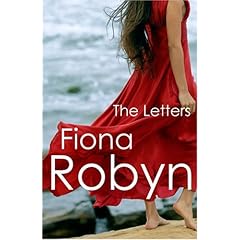
Fiona Robyn’s debut novel ‘The Letters’ has been recently released by Snowbooks.

It is a compelling and finely written story, which links a contemporary woman’s unique, mid-life journey of self-discovery with a series of mysterious letters from the past.
I really enjoyed this novel for its beautiful detail and its atmosphere, for its sense of intrigue and quiet wisdom, and for its warmth.
Fiona has been kind enough to answer my following nosy questions about her writing . . .
M: First things first, where did the initial ideas for ‘The Letters’ spring from? How did the novel begin?
F: My novels always begin when the lead character 'appears' in my head and I start getting to know them. Violet materialised as a tall, skinny character with a brusque manner - I knew she was a workaholic, and I knew that her life was about to change in a fundamental way. As time goes on I 'get to know' my character better, and the story emerges from there. Sometimes I think I know what a novel is going to be about (I thought The Letters might be about feminism, and bodies) but it turns out to be something completely different.
M: Although this novel is far more complex and challenging than any simple ‘comfort’ tale, there is a wonderful ease about your writing, almost like stepping into a warm bath. On your blog, you have talked about ideas of being 'the typist’ - channelling words and scenes as if from somewhere outside yourself. Could you tell me a little more about this?
F: Oh, what a lovely image! I am pleased you think so. When I speak about 'just being the typist' I'm not implying that I have a direct connection with my great great aunt Jessie on a spiritual plane... It's more that the characters and the story come from my subconscious, and that my subconscious knows better than 'I' do how the characters hang together, and what their journey might be. You could also compare it to the 'small mind, big mind' concept in Buddhism, I suppose. I see my job during the first draft as getting my small mind 'out of the way' so the story can come through me. 'I' come back during later drafts to make decisions about structure, clarity, dialogue etc., but I haven't found it helpful to get this part of me out too early. It can freeze me up completely if I'm not careful.
M: I especially loved the vivid and finely wrought descriptions in ‘The Letters’ and was hugely impressed at the extent of detail surrounding your main character, Violet. How deeply did you ‘live’ Violet during the writing?
F: I suppose I carry my lead characters around in my head while I'm writing, but I'm not thinking about them all the time. Sometimes details will come to me when I'm not expecting them - I'll be driving the car and I'll realise that my character hates cheese. But often the details arise when I'm writing a scene. Sometimes the details don't seem to fit the character when I read them back, and so I'll search around for one that feels more authentic.
M: I see that there are two more forthcoming Fiona Robyn titles on Snowbook’s website ‘The Blue Handbag’ and ‘Thaw'. Would you like to talk a little about what’s coming next, or perhaps what you are working on right now?
F: The Blue Handbag follows a 62 yr old gardener, Leonard, who becomes a reluctant detective after discovering some mysterious facts about his late wife. Thaw is about Ruth, a microbiologist, who gives herself three months to decide if she wants to carry on living or not - the book is her diary for those months. And my work-in-progress is about Joe, a nerdy boy who goes to visit his aunt in Amsterdam - I'm off there this Summer to get some research done. What a lucky person I am.
M: Thank you Fiona very, very much!
To find out more about lucky, clever Fiona and her writing, please visit http://www.fionarobyn.com/
About Last Night

Hurrah! We did it!!
My heart was banging, but I managed to sneak in there amidst lots of Proper Authors, including the very fabulous Shanta Everington (as above).
And I didn't fall over. Or even spill my wine.
Last night's 'Exclusively Independent' reading event was an interesting, varied and enjoyable evening. I'm especially grateful to Lauren at Legend for taking charge of us all. And to Sean at Flame too, for (among so many things) submitting How We Were Lost in the first place.
Please visit the 'Exclusively Independent' site if you'd like to learn more about last night . . .
Sunday, 15 March 2009
The End is (almost, sort of) Nigh
So – I’m coming to the end of the first draft of novel number three. There are only two more chapters left to write, I know (more or less) what needs to happen and I’m even still in first-draft-love with it. Nonetheless, I’m struggling.
In fact, my typing fingers seemed to have transformed into snails. And not just any snails. Obese, elderly snails in a going-backwards race.
This is probably partly because I have quite an ending in mind, which I’m a little scared of writing, but I also suspect that I’m on go-slow because I don’t actually want to finish. I’m aware that I’ll need to hide this one away for as long as I can possibly help it before I go back in again, on the editing attack, for draft two. And, as infuriating and disturbing as the writing has sometimes been, it’s also been such an exhilarating pleasure that I don’t want to say goodbye. Not just yet.
But there are a lot of things about to happen around these parts. There are more job things and children things that I need to focus on, and other-book things too (including finally finishing my creative writing MA and practising reading for next week’s Exclusively Independent event). I really should complete this draft – if only to begin it all over again, sooner.
But instead, what am I doing? I seem to be thinking about snails still, about how generally beautiful their trails are, and how strange their eyes and mouths, and about the snail hospital my sister and I ran when we were kids . . . And I’m even blogging about them too.
Please help.
Wednesday, 11 March 2009
'Exclusively Independent' Guest Blog
The lovely people at Legend Press asked me to write a guest blog in the run-up to next week's 'Exclusively Independent' event - so today I am blogging over here, discussing the journey of my first novel, 'How We Were Lost' from publication to selection in this inspiring new initiative . . .
Friday, 27 February 2009
And Another One!
I seem to be reading again, and even sooner – next Wednesday, 4th March, at 7.15pm, as part of Nottingham Writers' Studio next 'Word of Mouth' event at Nottingham’s Royal Centre!
The evening will also include writing by Nigel Smith, Wayne Burrows, Richard Pilgrim, Ian Douglas and Michael Eaton.
Tickets cost £5, which includes a complimentary glass of wine or juice and are available in advance from the Box Office (0115 989 5555), or on the door.
On this occasion, I won’t be reading from ‘How We Were Lost’, but my short story ‘On the Island’.
It would be very wonderful to see you there …
Tuesday, 24 February 2009
Exclusive, Exciting Reading News
After 'How We Were Lost' was selected as one of the titles to be promoted by the new Arts Council funded 'Exclusively Independent' initiative in December, I've now been invited to take part in their first ever reading event!
So if you're knocking about in London on Wednesday, 18th March at 7:30pm, why not drop by Hammersmith Library?
Along with fellow Flame novelist, the very talented Shanta Everington, the evening's other fascinating, featured authors will include Michael Marr, Peter Cave, Stephen Clayton and Michael Bollen.
Although tickets are free, you will need one to enter. These are available from Hammersmith Library (telephone: 020 8753 3812)
I hope to see you there!
Monday, 16 February 2009
An Interview with Catherine Eisner

And so without further ado, here's my interview with 'Sister Morphine' author, Catherine Eisner.
Could you describe at all where some of the initial ideas behind 'Sister Morphine' sprang from?
The narratives in 'Sister Morphine' have grown like accretions over the past ten years and each can stand alone as a work of fiction ... except, at the back of my mind I was working on a commonality that linked them, and this I found in the 'connective unconscious' of a group of characters, which is discovered in the last chapter. In my own confected 'soundbite' for this novel I wrote: 'Fifteen women - Felícia, Charlotte, Zoë, Elenore, Eveline, Miriam, Grete, Esther, Marianne, Irina, Mary, Elspeth, Theresa, Isolde and Roberta unveil their psychoses to you ... but not until the last page do we unlock the unsuspected secret that unites their destinies.'
There were three models for this book. 'Winesburg, Ohio' by Sherwood Anderson, which I admire tremendously and is a series of character studies connected by a distinctive location (my opening line, 'I am a madwoman', recalls Anderson's famous line, 'I am a fool' ... this was an Anderson character played, incidentally, by James Dean in one of his earliest roles). In my 'Sister Morphine' novel the special locale is Stoneburgh (pronounced 'Stoneboro'), somewhere windblown and chillily remote in South East England.
Secondly, as I wrote to my publisher (forgive me, this explanation is becoming somewhat complex), there is a definite structure to my book insofar as all 14 patient narratives were conceived as a pattern resembling a sonnet sequence, with the fifteenth section revealing the interconnecting lives of all 14 women, and their interdependence in a university city (Stoneburgh) in which their CPN (Community Psychiatric Nurse) practises. This poetic form is called a 'Sonnet of Sonnets' with a theme-line relayed through all 14 fourteen-line sonnets until the 15th when all the themes combine. This was the ambition, and more than a vestige of this structure remains.
The Stoneburgh Chronicles is a continuing theme in my work (see 'The Man in the Wardrobe' published in 'Ambit' Issue 191, Winter 2008).
However, in the end, I ask this. What is a novel? For instance, Italians read Lampedusa's 'Il Gattopardo' (The Leopard) as a classic novel but how many know that the whole thing was stitched together from post-mortal prose fragments by devoted editors to make a coherent chronicle?
And ... my third model is another classic short novel, 'The Bridge Over San Luis Rey', which examines the interconnectiveness of the characters' lives from a more spirito-mystical viewpoint (a great 20th Century work, at once seen as a parable of the 9/11 catastrophe and made rapidly into a feature film to reflect that terrible event, I understand). I read this book again in New York in the same month as the attack on the twin towers; my most vivid memory is of the armed policemen, each with a carbine at the corner of each block. The acrid smoke hanging in the air from this atrocity was sickening.
How did these narratives begin?
I rely, like many writers, on found objects so in a real sense I don't invent. An example is the tape recording in 'You Better Go Now'; it truly exists. The sentient plant and Russian Intelligence and the Lie Detector is a true story told to me by an émigré Russian academic I was very fond of (now, alas, deceased) ... 'a tropical shrub ... could be suborned by the will of the state.' I particularly liked this mordant remark of his which I incorporated into my text.
One of the features that I most admired about 'Sister Morphine' was its sense of inventiveness. I was fascinated by the literary allusions and by the inclusion of various, unexpected elements, including film scripts and musical scores and mathematical diagrams – and by the framework of the novel itself. You seem to enjoy overturning readers' expectations. Could you talk a little about that?
It's a dangerous compulsion to aim to be a completist, and I'm conscious of my weakness. Once I was aware that Patient ID CPN0312110842, Mary H. in 'Dispossession' was a father-fixated pianist I was keen to hear one of her compositions, so I completed her character with her own musical score; I was then tempted to discover how the classical dancer, Patient ID CPN0319141245, Esther G. in 'Honeymoon Without Maps', choreographed her own traumas and you can see the result in her Benish notation. It is an unexpected pattern on the page and even if it is a variant literary form it conveys (for me, at least) the emotional history of the patient in therapy.
As the introduction to 'Sister Morphine' makes clear, such compositions illustrate 'the growing popularity of self-narrative approaches towards a collaborative analysis of self-characterisation in counselling and psychotherapy. Diaries, letters, notebooks (including experiments in automatic writing), personal documents, news clippings, telephone conversations, and recordings in a variety of media are all identified as sources for experiential self-narrative assignments in psychotherapy, and this collection ... explores similar sources to demonstrate how these theoretical exercises can enhance self-understanding in practice.' Note; the exercise in 'automatic writing' may be found in the story-within-a-story composed by Patient ID CPN0338200976: Elspeth P. in 'A Stranger in Blood'; an upbeat narrative of transcendence I should make clear to potential readers.
Incidentally, the narrative, 'Dispossession', I freely admit has parallels with my own upbringing. I'm not squeamish about touching on my own childhood and fractured family relations as clearly they figure under various guises in 'Sister Morphine'. The experiences of an adoptee from birth are known to me at first hand (see 'A Stranger in Blood'). The facts are these ... I was brought up as the 'twin' of my first cousin who was adopted by my mother when her only sister died giving birth (septicemia due to absence of penicillin). We were born ten days apart. Sibling rivalry was compounded by another curious aspect of our upbringing and that was the 'precocious puberty' of my 'sister', which I now believe was due to her living in a household with the presence of an unrelated male (i.e. my father); from the earliest age she was exposed to non-familial male pheromones, an exposure which is now regarded as the trigger for premature pubertal development. At the time she was prescribed Dexedrine (her 'black bombers') for pubescent obesity which my young brother, aged 11, stole for his own experimentation, leading to his lifelong drug abuse. True. And true, too, that rivalrous cousinhood is another important sub-theme in my narratives.
How important is imagery in your writing?
Well. I'm a trained artist from a family of painters and engravers over several generations ... so you can imagine I am looking for the counter-image not necessarily the image itself ... the shadow not the substance, the reflection not the object. There are many examples in my work. Two examples: 'I felt neglected and vulnerable, held together weakly by will alone, like a house shored up by its own shadow.' In a recent work I write: 'I noticed the walls were painted imitation marbling up to the cornices. "We see least with borrowed eyes," my art mistress once said with emphatic earnestness in my last term at school, and I'd vowed then to always question the witness of my own sight.' This is obviously the stuff of all observational writing so I don't claim any special powers just because I was trained as a young student in another discipline. One further point: the expression of the writer's pen in creating an image is very much more controllable than a painter's brush!
Could you describe your general writing background?
The scenes in the publisher's office ('Elegy from a Locked Drawer') are pretty close to my own experience of academic publishing here and in New York; and the antics of performance poets from that period, many of whom I knew quite well, do influence my writing from time to time; the 'cut-up method', 'concrete poetry', 'found poetry', and other experimental writing. However, I hope I've never strayed into obfuscation in my fictions, which I like to regard as plain statements documenting unusual states of mind.
'The Cheated Eye' was my first literary baby, as it were, and first babies are so often the favourites (I speak as a middle child of three: the plain bread in the middle of a perverse sandwich composed outwardly of choice meats, as someone famous once said - I forget the name – who shared a similar familial position; also a sub-theme in 'Sister Morphine'). This work was first published in 1997, so there has been a slow accretion of related fictions over the past decade. In addition, my article ('In Character?') published in the 'Jewish Chronicle' in Chekhov's centenary year (he died in 1904) examined the Chekhov oeuvre and anti-Semitism, identifying significant mistranslations by hagiographers, uncorrected by biographers and editors of his correspondence even to this day; a product of these studies is my unpublished novel, 'D-r Tchekhov, Detektiv', a clinical investigation into criminal pathology.
Who are the authors who have inspired you? What are you reading at present?
The model writings of this kind are Ethelind Frances Colburn Mayne (1865–1941), a great Modernist writer of fiction and very early Freudian (she was the first translator of a number of Freud's works). Mayne's short fiction, 'The Separate Room' is a masterpiece. And Mayne's work ranks with Charlotte Perkins Gilmore, whose classic 'The Yellow Wallpaper' is also a perceptible influence on 'Sister Morphine'.
I will mention, also, lastly, Elizabeth von Arnim as a writer I admire (she was Katherine Mansfield's cousin) and I cite her novel 'Vera' as a model for the expressionistic cinematic effects I not infrequently introduce into my own writings (her first chapter is marvelous in this respect). May I place on record here for the first time my own formula for this kind writing (I have augmented TS Eliot's 'Birth, and copulation, and death, that's all the facts when you come to brass tacks...') and I express it as the 'ABC&D' maxim for thematic concision, when A+B+C+D = Anxiety, Birth, Copulation, Death (designedly the principal constituents of my narrative 'Dispossession' in 'Sister Morphine'). The discriminating reader will quickly spot where I have cloned themes from these writers by borrowing their literary DNA.
At present I am re-reading 'The Arabian Nights'; the story, 'The Ruined Man Who Became Rich Again Through A Dream' has a theme I stole for the final chapter of 'Sister Morphine', but it is unlikely I'll ever find a better theme! Of course, Scheherazade is really the Muse of all women writers, as a Storyteller-Under-Duress. 'MsLexia' ( rather a needy and whiny title for the journal, in my own view) has published works of mine, but 'Scheherazade' would have been a more apposite and affirming title, don't you think? There are elements of Scheherazade's dilemma in 'Sister Morphine' ... the narrator, a grief-counsellor, tells her stories to ward off her own grief.
Also I am re-reading 'Madame Bovery' in the first (and brilliant) English Edition translated by Karl Marx's daughter, Eleanor ( I have an original copy; it cost me £250 even twenty-five years ago!). How's this for an image from Flaubert: 'The daylight that came in by the chimney made velvet of the soot at the back of the fireplace ...' However, I suspect Flaubert may have been chiding the indolent Emma for neglecting to have her chimney swept!
Also from 'Bovary' : '... everyone rested his two hands on his thighs, carefully stretching the stride of their trousers, whose unsponged glossy cloth shone more brilliantly than the leather of their heavy boots.' Note the unusual word 'strides', now rarely used.
What are you working on right now? Do you have any set writing plans for the future?
I am currently preparing my sequel to 'Sister Morphine', provisionally entitled 'Cousine Cocaine'. Two passages have been published recently, independent of 'Sister Morphine', and a third passage is nearing completion. The inconclusive episode, 'Thought Police', in 'Sister Morphine', concerning the disappearance of the novelist, Theresa Ollivante, will also be completed for this work; at least, that is my intention. A number of other episodes are also mapped out.
What question are you pleased that I haven't asked you?
If you're so smart why ain't you rich?
(-: Thank you so much, Catherine.
'Sister Morphine' is available from the interesting and innovative people at Salt
Sunday, 15 February 2009
'Sister Morphine' by Catherine Eisner

As part of Salt’s ‘Cyclone’ blog tour, I’ll be posting an interview this week with ‘Sister Morphine’ author Catherine Eisner.
Dealing with death, desertion and drugs, revenge and revelation, ‘Sister Morphine’ is a unique collection of startlingly inventive and genre-busting tales.
Presented by the author as ‘Case Notes of a Community Psychiatric Nurse’, Eisner’s gathered female patient ‘narratives’ come together to form an intriguing text, littered with mind-games.
I’m looking forward to talking to Catherine about her work . . .
Monday, 2 February 2009
Snowstorm in my Head
Like much of the UK, we’ve woken up to white skies, white rooftops, white trees, white roads. Like probably half the UK, the smallest and I are too hot, too cold, nested in among tissues and blankets, Linctus and books. Muffled inside our own heads.
Probably shouldn’t be blogging. Don’t really know why I’m blogging.
Except.
The snow is lying so thickly and falling (still falling!) so beautifully and that is such a novelty here. Heart-lifting, dizzying. We love it, we want to be out in it – but we’re sick (the cat, meanwhile watches at the window, with flattened ears and risen hackles; he’s disgusted - wants the flutter of real feathers, not this).
My mind is whirling quietly too. There is so much to think about right now.
There are the happy, interesting book things coming up – the p/b launch this week of Caroline Smailes’ fabulous ‘Black Boxes’. And at some point too, I’m interviewing Catherine Eisner about her intriguing ‘Sister Morphine’ for Salt’s Cyclone tour.
And there is my own writing - I’m in the final third of novel 3, preoccupied by ideas of motherhood and loss and gleaming water, and all the different ways there are of being haunted . . .
Then there are the big issues, the possibly life-changing ones - jobs, home, children.
Spinning thoughts like TV static. Exciting, frightening. Yet somehow so absorbing I almost feel detached, disassociated. It doesn't quite make sense, not yet, I know.
But bugger it. Later on, I think, my smallest and I will bundle up despite our colds. We’ll go outside and play.
Thursday, 22 January 2009
New Blog Story Complete!
We've done it!!
Our new interactive blog story, 'The box' (cheers Eli!) is finished.
I've run all the pieces together and you can find it, completed, on the blogstories page of my website.
I'm not quite sure what kind of monster we have created (-; but I've had so much fun - I hope that you have too.
Once again, I've been amazed by your generosity and your imagination and your energy. Also by what a strangely living creature a story can be.
So, without further ado, enormous thanks are due to each of the wonderful, talented writers who took part –
C-Ray
Kerrie
sweetseadog
matt writer
Leatherdykeuk
Patience Mnbongwo
Dansk
Jamieson Wolf
Eli Regan
hedgehog
Anonymous
and Anonymous (?)
And with extra thanks to
Caroline
Nik
And DJ
For all their additional, kind blogging support.
And to all you lovely readers too, of course - Cheers!
Tuesday, 20 January 2009
Final Story Post!
By Dansk
6.
But I wasn't worried. I was content with my baby held warmly in my arms.
My sister however, did not feel the same way. She stood across the kitchen from me, her face as pale as her fancy Vionnet dress, glaring accusingly at me. Why didn't she understand? She never understood.
'What are you thinking?' she cried 'Its an abomination, put it back, get rid of it!'
Instinctively I held the baby tighter and backed away from her. 'No, I can't. I won't. Look how helpless he is.' I looked down into his deep blue eyes and felt nothing but love. Motherly love. This what I'd always dreamed of. 'I'm going to take care of him.'
'You're crazy.' my sister spat, her hand reaching out. She grabbed a kitchen knife from the sink raising it up in the air with its tip pointing down, dripping tepid sink water onto the floor.
'It's wrong. You must see that. Put it down Emily. Put it down now!'
Why did she not understand? Always telling me what to do. Bossing me around. No more, I thought. I had my baby and nothing, no one is going to take that away from me. I glanced around and saw the hammer resting on the table, out of reach. Then, my thinking became clearer, and I knew what I had to do. I looked down into the baby's eyes and saw understanding. I gently placed him on the table and turned to face my sister.
'Put the knife down Alice. Please.'
'It's wrong.' she repeated. 'I have to get rid of it'.
Alice lunged forward towards the helpless baby, the knife catching the morning sunlight. I grabbed her wrists forcing the blade up above us, but she managed to get her other hand to the baby's leg, and yanked him off the table. My heart stopped as I saw baby Dippel flailing as he shot across the kitchen bashing into the cupboard door and down onto the floor. I was incensed. That poor baby. I grabbed both of her wrists and started pushing back and kept pushing. Her eyes showed no understanding, no understanding at all. They were wide open with bitterness and hatred. I kept pushing and then the hatred drained from her eyes. Letting go, I watched my sister drop to the floor and with the knife pushed into deep into her own belly. She looked up at me in surprise and tried to speak but no sound came out. What have I done? I dropped to my knees and cried
'Alice. Sister. I'm sorry... ' But it was too late. Her head drooped down, lifeless.
'Why didn't she understand?' I cried.
'You did what you had to. She would have never understood what we have.'
I looked round and saw baby Dippel on the kitchen floor, struggling helplessly to support himself as my sisters blood pooled around him.
'I just wanted us to be a family.'
'We still can. It was good that you only cut her body. We can still save her. We can still be the family that you always dreamed of.'
The horror of my sisters death flowed away, replaced by the warm feeling of understanding.
'Now quickly, go find a saw. We have to remove her head.'
The End
Thank you Dansk - your last line nailed it for me!
Thank you EVERYONE, that was so much fun ( :
And a giant extra round of applause to Patience, here, and C-Ray on MySpace for providing such wonderfully insane alternative endings to this fabulously crazy tale (check them out)
But, I almost forgot! Before I can post the whole merged-together story on to my website, we need a title - any suggestions??
Saturday, 17 January 2009
Story Posts 4 & 5
4.
"I'm sure Uncle Dippel had far stranger dreams than you could ever have" said Alice. "There was that whole episode with the servant boy. And one Christmas, when Aunt Frieda was drunk she told me he'd worked for the Nazis during the war."
"Don't be stupid. Aunt Frieda's always drunk anyway."
Alice shrugged, and forced the claw end of the hammer between two pieces of wood.
"Wait!" I called out, but her mind was made up.
She yanked the hammer hard and went stumbling backwards as a shower of dust and splinters flew into the air. But she had barely even made a mark. Cursing, she tried again but still made little progress. Her face hardened as she wiped the dust from her face with the back of her sleeve.
"Bastard thing" she exclaimed. "You have a go."
My hand was shaking as the hammer was passed to me. I gulped audibly and moved towards the table.
There was a noise coming from the box, a kind of scratching and rustling. I could barely even bring myself to look at it, let alone go at it with a hammer.
But I didn’t have to. All of a sudden, the lid of the box popped up slightly - as though an internal catch had been undone. Then, in a few clattering movements, it was pushed aside and fell down onto the tabletop.
As I tentatively gazed into the darkness, the first thing I saw was a tiny pink hand reaching up towards me.
"No.... It can't be...." I said.
But so it was - there, lying on a glittering bed of styrofoam packing was a plump baby, no more than a few months old and surprisingly healthy-looking considering it's predicament.
"Hello Alice, Emily." Said the baby. "I expect you thought I was dead."
By hedgehog on Blogspot
5.
“Uncle Dippel?”
I had never heard Alice speak so quietly before. Her tone was lighter than the waft of her petticoats. But while she was the one shrinking back now and shaking, her pink shoulders quivering, her head swinging slowly back and forth - I leant closer. I was no longer afraid.
Apart from a rather baggy and sallow-looking nappy, the infant was naked. His flesh was smooth and rosy and gently folded; his little globe-like tummy almost glowed. He kicked his fat, little legs at me as if delighted. I noticed a light sprinkling of sawdust clinging to his perfect, pea-sized toes.
“For God’s sake, don’t touch him!” Alice hissed.
While there was an undeniable familiarity about those delicate features (something about the gumminess of that smile perhaps, or the frosty glint of those blue eyes?) the baby’s face was in no way an old man’s face. And he certainly didn’t smell like an old man, or a dead man, either. He smelt exactly as a baby should, as sweet and fresh as stretching bread dough. Intoxicating. When I reached out to lift him, I made sure to breathe him in.
And he was so warm against me; he fitted perfectly. My very own baby. Sure enough, it was the moment I’d been dreaming of for years.
Of course, Alice didn’t see it that way.
“Are you insane?” she sobbed. “What are you doing? Can’t you see what you’re doing?”
Then she was grasping for the metal rod beside the window - she twisted it so violently that the blind didn’t simply spring fully open, but fell crashing and rattling to the tiled floor. For several seconds, the kitchen was flooded with a light so glacier-bright that I could hardly see what I was cradling in my arms.
Your turn . . . Please end our blog story!
Wednesday, 14 January 2009
Story Posts 2 & 3
2.
'Emily you're such a scaredy-cat'
She turned to face the table, hammer still held upright, her smile now transformed into a look of determination. Yet she hesitated.
The kitchen light faded for a moment, perhaps just a passing cloud, and in that instant the box seemed to grow, to take on mass and became this foreboding presence in the room. My hands gripped the sideboard behind me.
'Uncle Dippel would be ashamed to see you now'
'Well Uncle Dippel isn't here now' I replied. 'I didn't ask him to leave me anything'
'But he did, and you know how rich he was. Whatever it is it must be something special if he sent it to you.'
I stared at the box. Our address stamped on the side in large Germanic letters. I could barely make out the return address. Then I noticed the small marks underneath. The three small zigzag lines above the letters B and F. I looked up at my sister and shook my head once.
'For God's sake' She said, and stepped up to the table. Placing her palm on the top of the box, she positioned the hammer's claw over one of the nails. And stopped.
'Emily' She breathed. 'It's warm'.
By Dansk on Blogspot
3.
“What do you mean?” I said. “It can’t be.”
Her eyes narrowed, but they seemed somehow even blacker. Shinier.
“Come here then,” she said. “Feel for yourself.”
I didn’t want to go to her; I didn’t even want to be in that kitchen anymore. I wanted to be outside with all the normal, box-less people, worrying about normal, box-less things. Late buses and low bank accounts and stale sandwiches for lunch. Instead, there I was, back at the table. My thin arm trembling as I reached out –
I snatched my hand away, gasping, long before I touched it.
Immediately, instinctively, I began rubbing at my fingers - although in truth, the heat emanating from that battered lid wasn’t fierce in any way. In fact, it was a strangely soft sensation. Like a fistful of feathers. A wafting sigh. I shuddered.
“Alice,” I began carefully. “Do you remember the stories that Mother used to tell about Uncle Dippel? About his laboratory. His hobbies . . .”
My sister rolled her glistening eyes at me. “Oh, you and Mother and your stories,” she said. “He was just a moneyed old man with too much time on his hands. And, like you, too much imagination.”
“But it wasn’t just the experiments, Alice. He was an inventor too. Don’t you remember? Wasn’t he supposed to be building some kind of literal ‘Dream Machine’? Some contraption meant to grant your deepest wishes.”
Alice snorted. She was playing with the hammer again, licking her plump lips. “And that’s supposed to be a problem? You’re crazy. C’mon. Let’s open it!”
I lifted my pale palms to her, trying to explain. “But you don’t understand. You have no idea. There are things that I dream of -”
I froze then, suddenly wordless. Interrupted by a gentle creak.
Your turn . . .
Sunday, 11 January 2009
Blog Story - First Post!
The box sat between us on the kitchen table. It was larger than I’d expected. A splintery wooden thing, speckled with nails, and barred with shadows where the sunshine fell in slices through the blind.
“Well, it’s here,” she said. “Arrived at last!”
She swished from foot to foot on her side of the box and her peach-painted mouth twitched as if with a smile, but I wasn’t convinced. Her eyes remained dark and wet. She was doing too much blinking.
“I can see that,” I replied.
I’d wanted to keep the atmosphere light, casual even, but my voice came out higher and frailer than I’d intended. I sounded like a child. A little boy, with a trembling lip and a crumpling chin and two grazed knees. Barely even pretending to be brave.
I cleared my throat and for a moment, thought that I smelt something beyond the sour mop bucket and old bacon fat, something beyond the synthetic roses of her perfume.
A forest smell, a black leaf smell. Could it truly be coming from within?
I saw that she had taken the hammer out already.
As she raised it slowly in one milk-white hand, I heard her cotton skirts whisper and the creak of her bodice, or of a stiff, pink sleeve. She turned the claw-end carefully to face me.
“Aren’t you going to open it?” she asked.
She held herself still now, waiting. From the world behind the blind came the ordinary morning sounds of birds twittering and car engines’ coughing. There was the panicked scuff and scurry of late-to-work feet. I let the clock tick once, twice, and then again before reflecting back her empty grin.
“You do the honours,” I suggested. And took a small step backwards, towards the door.
Your turn . . .
Saturday, 10 January 2009
Blog Story 2 - "Rules"
Before we begin (on Sunday), here’s a reminder of how to play:
Please continue the story directly from my last blogged instalment.
Although less is absolutely fine, please don’t write any more than 300 words.
Please don’t end the story (not till the final post, anyway).
Please don’t write anything obscene or offensive - although dark and disturbing is usually fine by me. (As is funny. And surreal. And heartbreaking. And action-packed. And quiet. And mostly anything you like really.)
Please feel free to post anonymously, if you should so desire.
Please play. And keep playing.
It could be fun. (-:
This blog story will also be running on MySpace and LiveJournal
Thank you so much folks!
See you tomorrow?
Wednesday, 7 January 2009
A New Year, A New Blog Story
I thought I’d begin another interactive blog story. Just a little one.
Would you like to play?
To begin 11th January 2009!
In not more than 300 words, written every 3 days, with only 3 posts each – can we create a short story together?
Last Time . . .
In June 2008, to coincide with the launch of my website, I posted the opening to an experimental short story on my then brand new blogs, and asked the blogs’ readers to provide the next 200 words. Every 2 days for 2 weeks, we took 200 word turns at creating a blog story. It was intense, and crazy, and fun. And at the end, we had 'The Cabin'. You can read the complete merged-together piece via the blog page of my website.
This Time -
As mentioned above, things will be slightly different. I thought I’d try something a little shorter and lighter (less commitment? More fun?) but make the time between posts and the maximum word-count for each a little longer . . .
The idea is this:
On Sunday 11th January 2009, I will post the opening to a brand new short story, which I hope that you will continue by providing the next 300 words (or far less if you so desire). After 3 days (January 14th), I’ll read the responses and choose just one to carry on from with my next piece. Then it will be your turn again. And so on.
Once again, I promise to publish the whole, joined together piece on my website http://www.megantaylor.info/
I’m looking forward to playing . . .
Wednesday, 24 December 2008
Merry Christmas!
Thank you everyone for your amazing support. Wishing you love and peace and a bulging stocking ( :
I've included a tenuously festive, but very short story below . . .
Happy Christmas!!!
At the end of the meal
“So - Tim’s decided he’s gay!” says Heather.
She’s breathless; her cheeks pink, her eyes flashing silver, but she winces when her desert spoon scrapes across the bowl.
It’s the end of the meal. We’ve dispensed with her Thai chicken and the seasonal small talk and general gossip. We’ve downed two bottles of Pinot and it’s that time of the evening, the time for flushed skin and glittering eyes. For revelations, truth and ice cream.
It’s the moment when we connect, when we reconnect, at last. It always happens and though we never say it, I think we both understand that this is why we still go on meeting the way we do, why we continue the ritual of a meal in her big, warm family kitchen when I’m back in town each Christmas. It’s why we still describe one another as best friends, though we rarely meet for the rest of the whole long year.
“Tim!” I say, though it takes me a moment to remember who he is. He’s her son of course. Her son, how could I have forgotten? It’s the wine, I think, making me drift. I’m too easily distracted by my thoughts, too busy looking at Heather’s things, at all the greetings cards and tinsel, at the new cracks spreading around her eyes and the way her lipstick has worn off . . .
And, through the window, snow is falling the way it does in films and dreams, a steady heartbreaking dance of night and light. I lift my fingers to my own lips to check that my similar rosy smile is still in place.
“How old is Tim now?” I ask.
“Sixteen!” she says and lifts her hands, her eyebrows.
“Sixteen,” I echo. “Christ.”
And I know that she thinks I’m exclaiming over the way the years have rushed by, how it only seems like yesterday that I was a bridesmaid at her wedding, that she was matron of honour at mine . . . but what I’m actually thinking is sixteen.
It’s the age we were when we went on our school skiing trip to France. When she was the pretty one, the graceful one, the girl who flew down the slopes and skated perfect figure-of-eights on the sparkling rink. While I spent much of that week flat on my back, against the ice.
More snow, I think, my eyes moving between the window and her talking, eating, lipstick-less mouth. Her teeth part, and I watch the ice-cream slipping slowly between them, but I’m the one shivers. I’m suddenly remembering how freezing it was in those chalets, so cold that even after she climbed into my bunk, we couldn’t get warm enough. We were never warm enough. Her hands on my back - I can feel them still - were as cool and smooth as metal . . .
“We thought it was just a phase,” she’s saying. “But then I caught them! Actually kissing! And under the mistletoe of all places!”
She laughs, perhaps a little too loudly, with her head thrown back, showing me the pale curve of her throat, the point of her chin. And though her hair has a lot of grey in it, even some white, I think how it still falls in exactly the same heavy way. Like cloth, I think. Like winter water.
She’s still the pretty one.
“They just looked so funny,” she says. “So strange. Two boys, holding one another like that, hardly more than children. And they looked so alike! It was as if Tim was kissing himself, his own reflection . . .”
I down my wine quickly and lean across, trying my best to keep hold of her tin-foil eyes.
“Have you ever . . .” I begin, “would you ever . . .”
But I can’t do it. Whatever I was going to say, I can’t say it. It’s too hot in here suddenly; it’s suffocating. I glance down at my bowl instead, at the peaks and spreading pools of untouched vanilla, and at my own spoon, turning over in my hand. The silver jumps as it catches the light. For a second it’s blinding, and in that second, she reaches over and takes it from me.
And I feel the creak, and then the avalanche, as she lifts it to her mouth.
m xx
Subscribe to:
Posts (Atom)