I'm guest-blogging over here -
http://www.shewrites.com/profiles/blogs/turning-pages-by-megan-taylor
talking about 2011 becoming 2012 (and quite clearly not really knowing what I'm talking about at all) but hugest of thanks to Fiona Robyn and She Writes for letting me babble.
Showing posts with label Fiona Robyn. Show all posts
Showing posts with label Fiona Robyn. Show all posts
Friday, 6 January 2012

Sunday, 28 February 2010
Thaw Blogsplash

Ruth's diary is the new novel by Fiona Robyn, called Thaw. She has decided to blog the novel in its entirety over the next few months, so you can read it for free.
Ruth's first entry is below, and you can continue reading tomorrow here.
*
These hands are ninety-three years old. They belong to Charlotte Marie Bradley Miller. She was so frail that her grand-daughter had to carry her onto the set to take this photo. It’s a close-up. Her emaciated arms emerge from the top corners of the photo and the background is black, maybe velvet, as if we’re being protected from seeing the strings. One wrist rests on the other, and her fingers hang loose, close together, a pair of folded wings. And you can see her insides.
The bones of her knuckles bulge out of the skin, which sags like plastic that has melted in the sun and is dripping off her, wrinkling and folding. Her veins look as though they’re stuck to the outside of her hands. They’re a colour that’s difficult to describe: blue, but also silver, green; her blood runs through them, close to the surface. The book says she died shortly after they took this picture. Did she even get to see it? Maybe it was the last beautiful thing she left in the world.
I’m trying to decide whether or not I want to carry on living. I’m giving myself three months of this journal to decide. You might think that sounds melodramatic, but I don’t think I’m alone in wondering whether it’s all worth it. I’ve seen the look in people’s eyes. Stiff suits travelling to work, morning after morning, on the cramped and humid tube. Tarted-up girls and gangs of boys reeking of aftershave, reeling on the pavements on a Friday night, trying to mop up the dreariness of their week with one desperate, fake-happy night. I’ve heard the weary grief in my dad’s voice.
So where do I start with all this? What do you want to know about me? I’m Ruth White, thirty-two years old, going on a hundred. I live alone with no boyfriend and no cat in a tiny flat in central London. In fact, I had a non-relationship with a man at work, Dan, for seven years. I’m sitting in my bedroom-cum-living room right now, looking up every so often at the thin rain slanting across a flat grey sky. I work in a city hospital lab as a microbiologist. My dad is an accountant and lives with his sensible second wife Julie, in a sensible second home. Mother finished dying when I was fourteen, three years after her first diagnosis. What else? What else is there?
Charlotte Marie Bradley Miller. I looked at her hands for twelve minutes. It was odd describing what I was seeing in words. Usually the picture just sits inside my head and I swish it around like tasting wine. I have huge books all over my flat; books you have to take in both hands to lift. I’ve had the photo habit for years. Mother bought me my first book, black and white landscapes by Ansel Adams. When she got really ill, I used to take it to bed with me and look at it for hours, concentrating on the huge trees, the still water, the never-ending skies. I suppose it helped me think about something other than what was happening. I learned to focus on one photo at a time rather than flicking from scene to scene in search of something to hold me. If I concentrate, then everything stands still. Although I use them to escape the world, I also think they bring me closer to it. I’ve still got that book. When I take it out, I handle the pages as though they might flake into dust.
Mother used to write a journal. When I was small, I sat by her bed in the early mornings on a hard chair and looked at her face as her pen spat out sentences in short bursts. I imagined what she might have been writing about; princesses dressed in star-patterned silk, talking horses, adventures with pirates. More likely she was writing about what she was going to cook for dinner and how irritating Dad’s snoring was.
I’ve always wanted to write my own journal, and this is my chance. Maybe my last chance. The idea is that every night for three months, I’ll take one of these heavy sheets of pure white paper, rough under my fingertips, and fill it up on both sides. If my suicide note is nearly a hundred pages long, then no-one can accuse me of not thinking it through. No-one can say; ‘It makes no sense; she was a polite, cheerful girl, had everything to live for’, before adding that I did keep myself to myself. It’ll all be here. I’m using a silver fountain pen with purple ink. A bit flamboyant for me, I know. I need these idiosyncratic rituals; they hold things in place. Like the way I make tea, squeezing the tea-bag three times, the exact amount of milk, seven stirs. My writing is small and neat; I’m striping the paper. I’m near the bottom of the page now. Only ninety-one more days to go before I’m allowed to make my decision. That’s it for today. It’s begun.
Continue reading tomorrow here...
Or buy the complete novel right now, right here (-:Tuesday, 2 February 2010
Thaw

"I feel strange after writing today. Like I have a blackbird in my stomach."
(p21, 'Thaw' by Fiona Robyn)
(p21, 'Thaw' by Fiona Robyn)
A vivid and delicious lyricism runs throughout Fiona Robyn’s compassionate and compelling third novel, ‘Thaw’.
‘Thaw’ tells the story of thirty-two year old Ruth, who ‘doesn’t know if she wants to be thirty-three’. Her life is meticulously ordered, her relationships painstakingly detached – her loneliness devastating. ‘Thaw’ is Ruth’s journal, covering three months, as she decides whether or not she will take her own life.
Last year, I interviewed Fiona after reading her assured and sensitive debut, ‘The Letters’. There was a delicious ease to reading that novel, a pleasure that I compared to sinking into a warm bath – although similarly lifted and illuminated throughout by Fiona’s deft, poetic voice, ‘Thaw’ is very different.
Describing deep-seated loss and self-destruction, it is a necessarily darker, spikier read, and yet the pacing of its diary structure makes it difficult to put down. Most of all, there is an authenticity about Ruth and her struggles that cries out for understanding, reaching far beyond the novel’s pages.
It is this sense of empathy, combined with the beauty of Fiona’s prose, which makes ‘Thaw’ such a valuable and unforgettable book.
"She is all curve and smooth skin. She looks like a seed or a bulb; if you planted her in dark compost and waited patiently, she'd burst into flower."
('Thaw, p.42)
Fiona is celebrating 'Thaw's publication with a unique, literary, internet experiment. From March 1st, she will be blogging the entire novel, for free, here!*
In order to spread the word, she's beginning with a Blogsplash and she needs as many bloggers as possible to get involved. If you'd be willing to host the first page of the fantastic 'Thaw' on your blog on March 1st, please do get in touch ...
*though I personally think it would be better not to wait. You can buy this beautiful book right now.
Thursday, 22 October 2009
Thaw Blogsplash

Fiona Robyn is going to blog her next novel, Thaw, starting on the 1st of March next year. The novel follows 32 year old Ruth’s diary over three months as she decides whether or not to carry on living.
To help spread the word she’s organising a Blogsplash, where blogs will publish the first page of Ruth’s diary simultaneously (and a link to the blog).
She’s aiming to get 1000 blogs involved – if you’d be interested in joining in, email her at fiona@fionarobyn.com or find out more information here.
Thursday, 19 March 2009
An Interview with Fiona Robyn
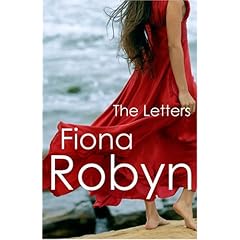
Fiona Robyn’s debut novel ‘The Letters’ has been recently released by Snowbooks.

It is a compelling and finely written story, which links a contemporary woman’s unique, mid-life journey of self-discovery with a series of mysterious letters from the past.
I really enjoyed this novel for its beautiful detail and its atmosphere, for its sense of intrigue and quiet wisdom, and for its warmth.
Fiona has been kind enough to answer my following nosy questions about her writing . . .
M: First things first, where did the initial ideas for ‘The Letters’ spring from? How did the novel begin?
F: My novels always begin when the lead character 'appears' in my head and I start getting to know them. Violet materialised as a tall, skinny character with a brusque manner - I knew she was a workaholic, and I knew that her life was about to change in a fundamental way. As time goes on I 'get to know' my character better, and the story emerges from there. Sometimes I think I know what a novel is going to be about (I thought The Letters might be about feminism, and bodies) but it turns out to be something completely different.
M: Although this novel is far more complex and challenging than any simple ‘comfort’ tale, there is a wonderful ease about your writing, almost like stepping into a warm bath. On your blog, you have talked about ideas of being 'the typist’ - channelling words and scenes as if from somewhere outside yourself. Could you tell me a little more about this?
F: Oh, what a lovely image! I am pleased you think so. When I speak about 'just being the typist' I'm not implying that I have a direct connection with my great great aunt Jessie on a spiritual plane... It's more that the characters and the story come from my subconscious, and that my subconscious knows better than 'I' do how the characters hang together, and what their journey might be. You could also compare it to the 'small mind, big mind' concept in Buddhism, I suppose. I see my job during the first draft as getting my small mind 'out of the way' so the story can come through me. 'I' come back during later drafts to make decisions about structure, clarity, dialogue etc., but I haven't found it helpful to get this part of me out too early. It can freeze me up completely if I'm not careful.
M: I especially loved the vivid and finely wrought descriptions in ‘The Letters’ and was hugely impressed at the extent of detail surrounding your main character, Violet. How deeply did you ‘live’ Violet during the writing?
F: I suppose I carry my lead characters around in my head while I'm writing, but I'm not thinking about them all the time. Sometimes details will come to me when I'm not expecting them - I'll be driving the car and I'll realise that my character hates cheese. But often the details arise when I'm writing a scene. Sometimes the details don't seem to fit the character when I read them back, and so I'll search around for one that feels more authentic.
M: I see that there are two more forthcoming Fiona Robyn titles on Snowbook’s website ‘The Blue Handbag’ and ‘Thaw'. Would you like to talk a little about what’s coming next, or perhaps what you are working on right now?
F: The Blue Handbag follows a 62 yr old gardener, Leonard, who becomes a reluctant detective after discovering some mysterious facts about his late wife. Thaw is about Ruth, a microbiologist, who gives herself three months to decide if she wants to carry on living or not - the book is her diary for those months. And my work-in-progress is about Joe, a nerdy boy who goes to visit his aunt in Amsterdam - I'm off there this Summer to get some research done. What a lucky person I am.
M: Thank you Fiona very, very much!
To find out more about lucky, clever Fiona and her writing, please visit http://www.fionarobyn.com/
F: My novels always begin when the lead character 'appears' in my head and I start getting to know them. Violet materialised as a tall, skinny character with a brusque manner - I knew she was a workaholic, and I knew that her life was about to change in a fundamental way. As time goes on I 'get to know' my character better, and the story emerges from there. Sometimes I think I know what a novel is going to be about (I thought The Letters might be about feminism, and bodies) but it turns out to be something completely different.
M: Although this novel is far more complex and challenging than any simple ‘comfort’ tale, there is a wonderful ease about your writing, almost like stepping into a warm bath. On your blog, you have talked about ideas of being 'the typist’ - channelling words and scenes as if from somewhere outside yourself. Could you tell me a little more about this?
F: Oh, what a lovely image! I am pleased you think so. When I speak about 'just being the typist' I'm not implying that I have a direct connection with my great great aunt Jessie on a spiritual plane... It's more that the characters and the story come from my subconscious, and that my subconscious knows better than 'I' do how the characters hang together, and what their journey might be. You could also compare it to the 'small mind, big mind' concept in Buddhism, I suppose. I see my job during the first draft as getting my small mind 'out of the way' so the story can come through me. 'I' come back during later drafts to make decisions about structure, clarity, dialogue etc., but I haven't found it helpful to get this part of me out too early. It can freeze me up completely if I'm not careful.
M: I especially loved the vivid and finely wrought descriptions in ‘The Letters’ and was hugely impressed at the extent of detail surrounding your main character, Violet. How deeply did you ‘live’ Violet during the writing?
F: I suppose I carry my lead characters around in my head while I'm writing, but I'm not thinking about them all the time. Sometimes details will come to me when I'm not expecting them - I'll be driving the car and I'll realise that my character hates cheese. But often the details arise when I'm writing a scene. Sometimes the details don't seem to fit the character when I read them back, and so I'll search around for one that feels more authentic.
M: I see that there are two more forthcoming Fiona Robyn titles on Snowbook’s website ‘The Blue Handbag’ and ‘Thaw'. Would you like to talk a little about what’s coming next, or perhaps what you are working on right now?
F: The Blue Handbag follows a 62 yr old gardener, Leonard, who becomes a reluctant detective after discovering some mysterious facts about his late wife. Thaw is about Ruth, a microbiologist, who gives herself three months to decide if she wants to carry on living or not - the book is her diary for those months. And my work-in-progress is about Joe, a nerdy boy who goes to visit his aunt in Amsterdam - I'm off there this Summer to get some research done. What a lucky person I am.
M: Thank you Fiona very, very much!
To find out more about lucky, clever Fiona and her writing, please visit http://www.fionarobyn.com/
Subscribe to:
Posts (Atom)